What Is Silk? What Is Satin?
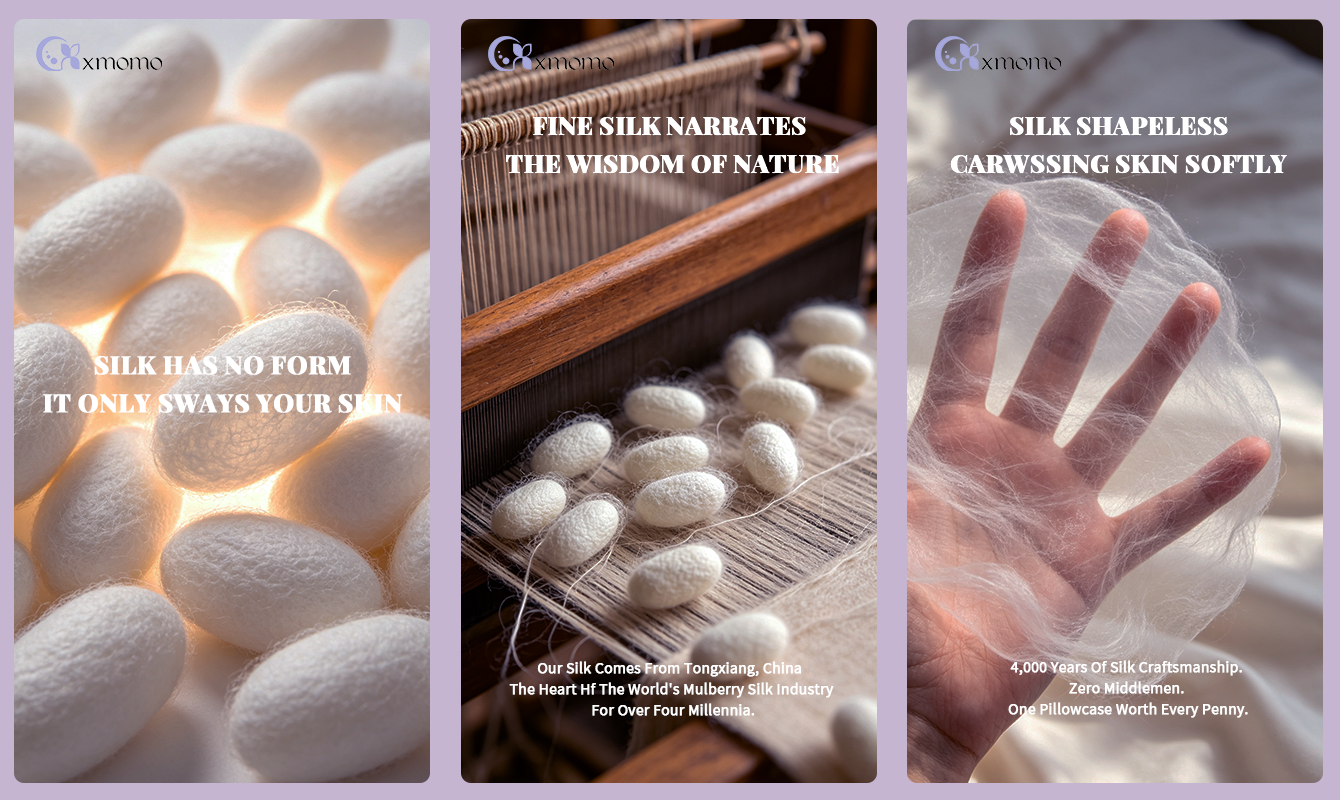
Silk is a natural protein fiber produced by silkworms. Mulberry silk — the highest quality — comes from Bombyx mori silkworms fed exclusively on mulberry leaves. It’s been prized for over 5,000 years for its luster, strength, and skin-friendly properties.
Satin is not a material — it’s a weaving technique. Satin can be made from silk, polyester, nylon, or rayon. When you see “satin pillowcase” on the market, it almost always means polyester satin — a synthetic fabric woven to imitate the look of silk.
The Key Difference: Material vs Weave
| | Silk Pillowcase | Satin Pillowcase (Polyester) |
|---|
| Material | Natural protein fiber | Synthetic (polyester) |
| Breathability | Excellent — natural temperature regulation | Poor — traps heat |
| Moisture absorption | Low — keeps skin hydrated | Very low — but also traps sweat |
| Hypoallergenic | Yes — natural sericin protein | No — synthetic fibers can irritate |
| Biodegradable | Yes | No — microplastic shedding |
| Surface smoothness | Naturally smooth | Smooth but coating wears off |
Benefits Comparison
Both silk and satin pillowcases are smoother than cotton, so both reduce hair friction compared to regular pillowcases. However, silk offers additional benefits that satin can’t match:
- Temperature regulation: Silk breathes naturally; polyester satin doesn’t
- Hypoallergenic: Silk resists dust mites naturally; satin doesn’t
- Skin moisture: Silk doesn’t absorb skincare products; satin also doesn’t, but traps sweat instead
- Antimicrobial: naturally low-absorbency, resisting moisture and dust-mite buildup
For the full breakdown of silk’s benefits, see our 7 silk pillowcase benefits guide.
Price Comparison
| | Silk Pillowcase (22 Momme) | Polyester Satin Pillowcase |
|---|
| Price range | $25 – $60 | $5 – $15 |
| Lifespan | 2-3 years | 3-6 months |
| Cost per month | $0.70 – $2.00 | $1.00 – $4.00 |
While satin is cheaper upfront, silk is actually more cost-effective over time because of its dramatically longer lifespan. A 22 Momme silk pillowcase lasts 4-8x longer than a polyester satin one.
Durability Comparison
Silk is one of the strongest natural fibers by weight — stronger than steel of the same diameter. 22 Momme silk maintains its smoothness and luster through hundreds of washes when properly cared for (see our silk washing guide).
Polyester satin, on the other hand, develops pills, loses its smooth coating, and starts feeling rough after 20-30 washes. The synthetic fibers also trap body oils and bacteria over time.
Which Is Better for Hair?
Silk wins. While both reduce friction compared to cotton, silk’s natural protein structure is gentler on hair cuticles. Silk also doesn’t generate static electricity the way polyester satin does — a major cause of flyaways and frizz in dry climates.
Which Is Better for Skin?
Silk wins again. Silk’s breathability prevents the heat and moisture buildup that can trigger acne. The natural antimicrobial properties of sericin protein help keep the pillowcase cleaner between washes. For sensitive skin, eczema, or rosacea, silk is strongly recommended by dermatologists.
How to Tell Silk from Satin
- The touch test: Silk feels cool to the touch and warms gradually. Satin feels immediately warm and slightly “plasticky.”
- The luster test: Silk has a soft, natural luster that changes with the angle. Satin has a uniform, mirror-like shine.
- The burn test: Silk burns slowly, smells like burnt hair, and leaves brittle ash. Polyester melts into a hard ball with a chemical smell.
- The price test: If a “silk” pillowcase costs under $10, it’s almost certainly polyester satin.
- The label test: Look for “100% mulberry silk” and Momme weight. If it says “satin weave” or just “satin,” it’s synthetic.
Not sure what Momme means? Read our complete Momme guide.
Disclaimer: This article is for general information only and is not medical, legal, or professional advice. All xmomo products — including silk pillowcases, sleep masks, silk bonnets, and custom embroidered items — are lifestyle and comfort products, and are not intended to diagnose, treat, cure, or prevent any disease or skin condition. Individual results may vary. Always consult a qualified dermatologist or physician for skin or hair concerns.