
Yes — silk feels cool to the touch, breathes naturally, and wicks moisture away from your skin instead of absorbing it. It won’t outperform gel-infused “cooling” products engineered purely for cold, but compared with cotton and especially polyester satin, most hot sleepers notice a real difference on the cheek and neck.
Share to
Table of Contents
Why Silk Feels Cool (The Simple Physics)
- High thermal conductivity. Silk pulls heat away from your skin faster than cotton does — the same reason metal feels colder than wood at room temperature. That “cool touch” is immediate, the second your cheek hits the pillow.
- Natural protein fibers breathe. Silk is woven from continuous protein filaments that allow air circulation, unlike synthetic fibers that trap a warm microclimate against your face.
- It wicks instead of soaking. When you sweat, cotton absorbs and holds moisture — which then heats up against your skin. Silk moves moisture outward, keeping the surface drier and cooler.
Silk vs. Cotton vs. Satin: Night-Temperature Face-Off
| Mulberry silk | Cotton | Polyester satin | |
|---|---|---|---|
| Cool to the touch | ✅ Immediately | ➖ Neutral | ❌ Feels warm |
| Breathability | ✅ Excellent | ✅ Good | ❌ Traps heat |
| Moisture handling | ✅ Wicks away | ➖ Absorbs & holds | ❌ Clings when humid |
| Static in dry winter | ✅ Little | ➖ Some | ❌ Noticeable |
That last column matters: most cheap “silky” pillowcases are polyester satin, which is the worst option for hot sleepers. We cover the full fiber-vs-weave confusion in Silk vs. Satin: Which Is Better for Hair and Skin?
Who Notices the Cooling Effect Most?
- Hot sleepers and side-sleepers — the whole face-pillow contact zone stays drier
- Perimenopausal women with night sweats — drier surface, less of that “stuck to the pillow” feeling
- People in humid climates — wicking beats absorption when the air is already wet
- Anyone whose “cooling” polyester pillowcase made things worse — common story
Manage Your Expectations
Silk is temperature-regulating, not air-conditioning. It keeps the pillow surface cooler and drier than cotton — it can’t chill a 28°C bedroom. For genuinely hot rooms, pair silk with breathable bedding and lower room temperature.
Better sleep itself is a skincare multiplier — the Sleep Foundation connects quality sleep with reduced skin irritation and better recovery. A cooler cheek-zone is one small, comfortable upgrade in that direction.
Buying Tip: Momme Weight Affects Coolness
Heavier silk (22+ momme) has a denser weave that holds its cool, smooth surface after hundreds of washes, while lightweight 16–19 momme silk can thin out and lose that crisp feel. Our momme guide explains the grading system, and the 2026 buyer’s guide covers everything else to check before you buy. For the full comfort-and-beauty picture, see silk pillowcase benefits.
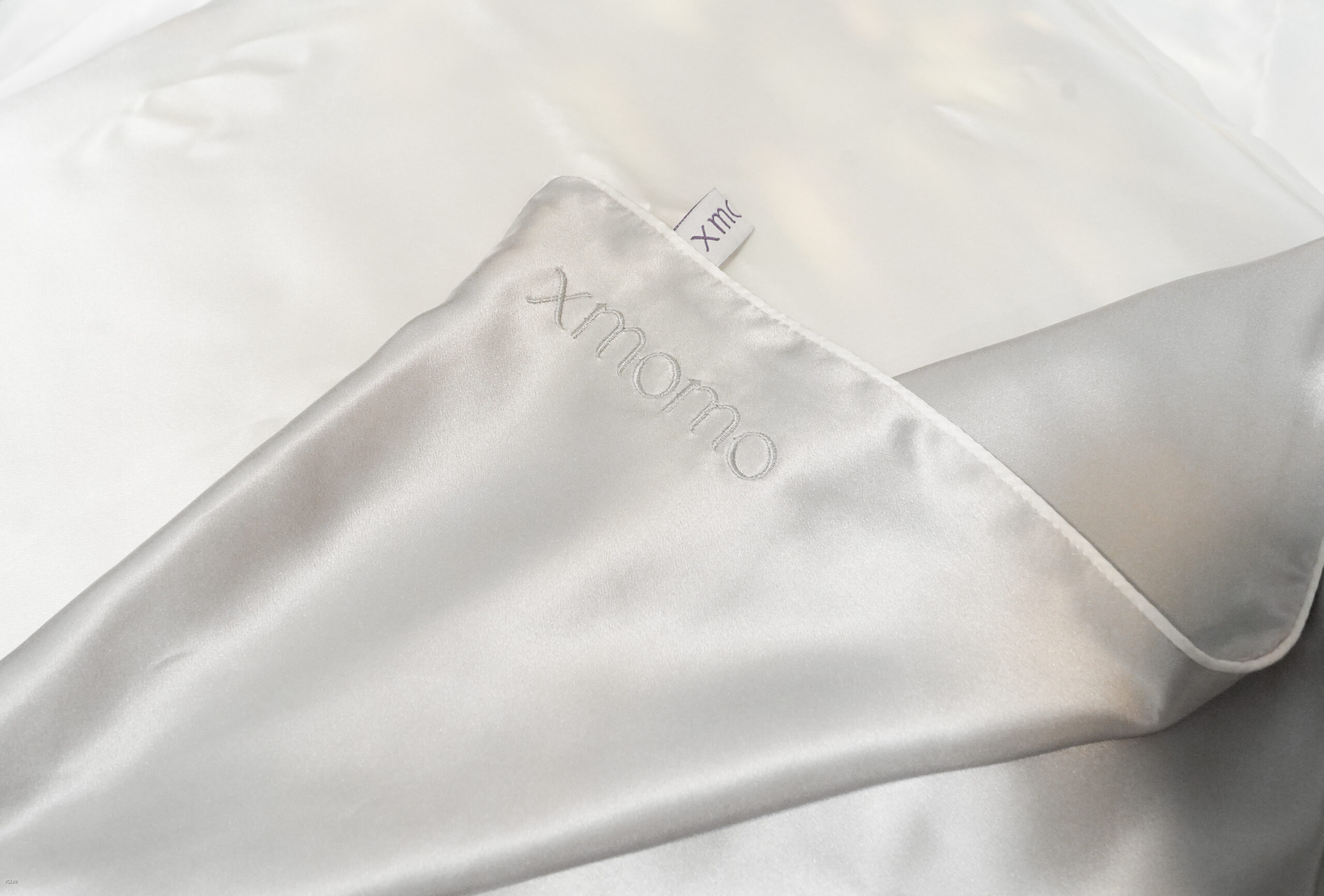
Cool cheek, calm skin, calmer mornings. xmomo 22-Momme 6A mulberry silk — breathable, OEKO-TEX certified, factory-direct. Shop cooling silk →

Cooling Gray Queen Silk Pillowcase
Enjoy Refreshing Sleep while Hydrating Skin and Revitalizing Hair
FAQ
Silk. It conducts heat away from the skin faster, breathes well, and wicks moisture rather than absorbing it. Cotton is breathable too, but it holds sweat against your face.
They help. The surface stays drier because silk wicks moisture outward instead of soaking it in — many perimenopausal sleepers find this the single biggest comfort difference.
Yes — silk is temperature-regulating, not just cooling. The same wicking action keeps the microclimate comfortable year-round, with almost no static compared to polyester.
